
Medical device
What is medical device?
A medical device is defined as a product intended for use on humans for a medical purpose. Unlike drugs, medical devices typically exert their effects through technical or physical means rather than chemically, as is the case with general pharmaceutical products. Medical devices, also known as healthcare products, are used for the prevention, diagnosis, treatment, and care of diseases.
Medical devices - A wide variety of products for medical use
Medical devices include all equipment and aids used for everything from examining a patient to providing therapy or performing surgical procedures. Other medical devices include ventilators, therapeutic devices, wheelchairs, X-ray machines, computed tomography (CT) scanners, and magnetic resonance imaging (MRI) scanners, pacemakers, and devices for processing and analyzing bodily fluids. Another category of medical devices encompasses all aids used for life-saving measures, as well as for the rescue and care of accident victims.

Examples of Medical Devices
- Everyday products: syringes, clinical thermometers, walking aids, nursing beds,
- Medical aids: food analyzers, blood glucose meters, wheelchairs, hearing aids,
- Complex large-scale devices: ventilators, ultrasound and X-ray machines, MRI scanners
- Digital products: medical apps and software
Difference to pharmaceuticals
- Mode of action: Medical devices typically work mechanically or through other physical means. Drugs act chemically or biologically within the body.
- Purpose: Medical devices are used for the diagnosis, prevention, monitoring, or treatment of various diseases as well as injuries.
Difference to wellness gadgets
- Mode of action: Medical devices have a proven mode of action in clinical studies, along with the corresponding approvals and certifications. Medical devices are developed based on scientific research and its findings.
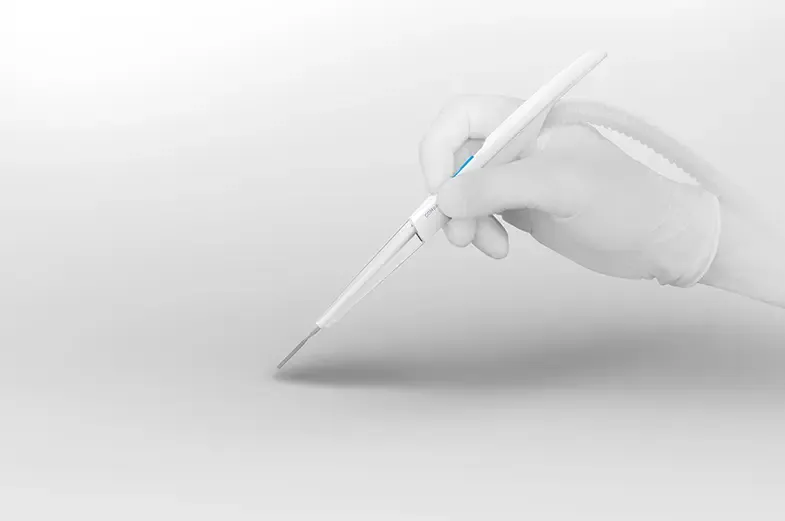
Product development of Medical devices
The development of medical devices requires a great deal of expertise. These projects are typically challenging from both a technical and regulatory standpoint, involving lengthy phases of clinical trials and approval processes. Prior to this, a thorough analysis of use cases is essential for designing products that are easy to use and inspire confidence. Design plays a particularly important role in medical technology, as it can greatly simplify operation and, in extreme cases, save lives.
Extended definitions of medical devices are given by Wikipedia.