
Competence down to the last detail
defortec GmbH is an innovative product design agency for customized design and product development. In addition to product design and user interface design, we have extensive experience in the industrial design of capital goods and the design development of technical products. From laboratory equipment to injection molding machines - we can do high-tech.
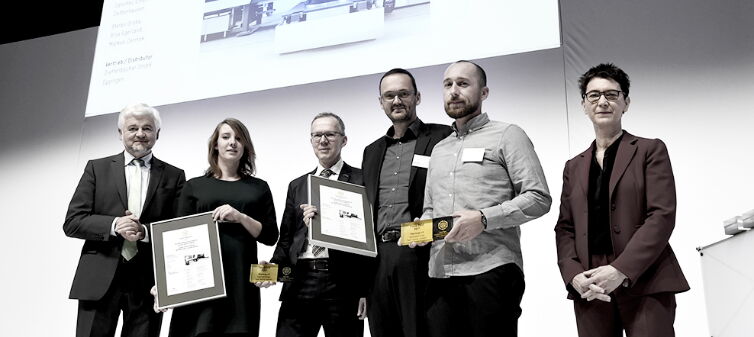
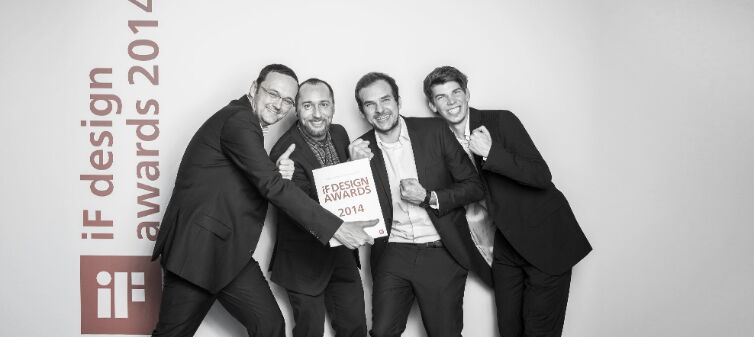
The success of our customers and over 50 national and international design awards are proof of the quality of our work as a renowned design office from Dettenhausen near Tübingen. Dipl. Designer Stefan Grobe, managing partner of defortec, is a jury member of various international design awards and a lecturer in product and industrial design.
We look forward to a successful collaboration!
Why it's expensive to neglect design—
eight questions, eight answers
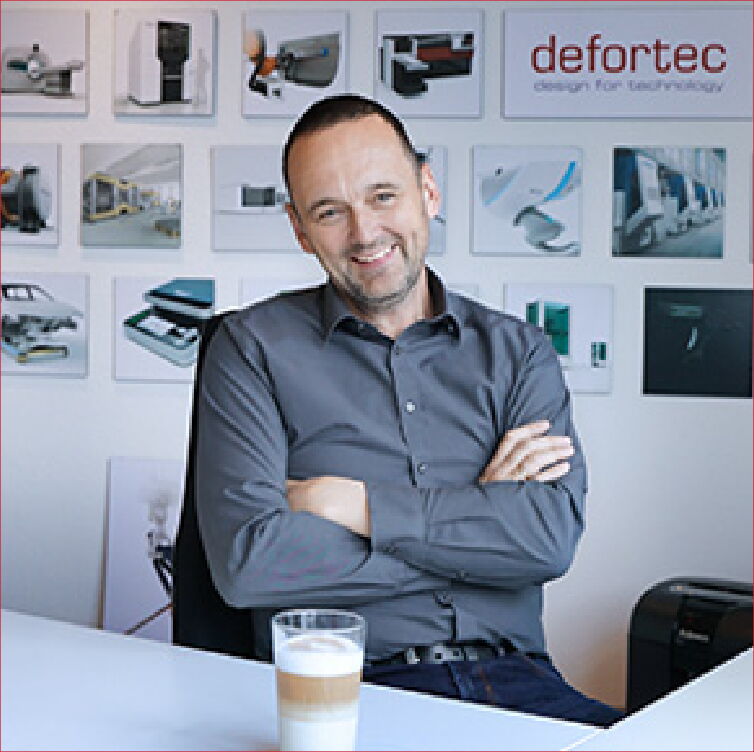
»Our strength lies in transferring solutions and knowledge from one industry to another in order to trigger innovation there.«
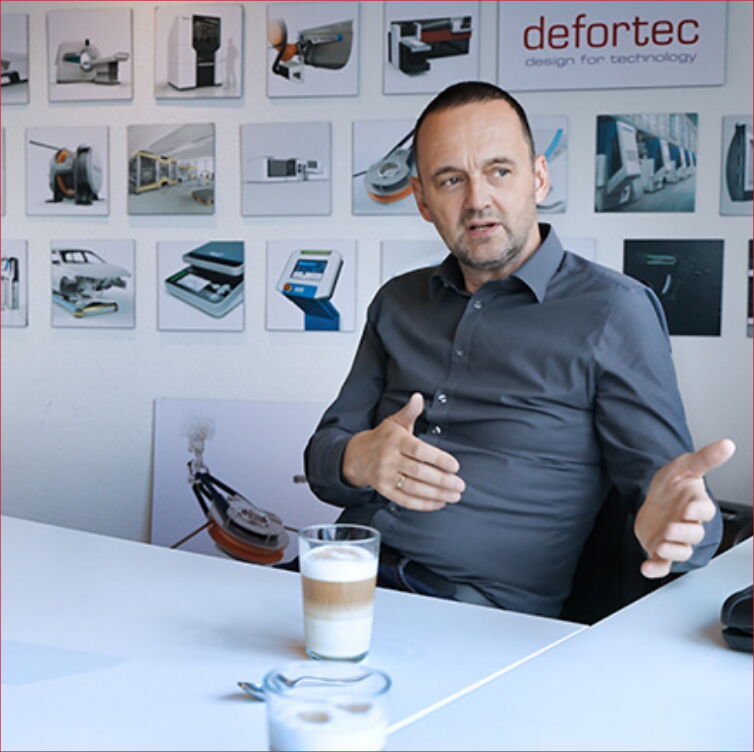
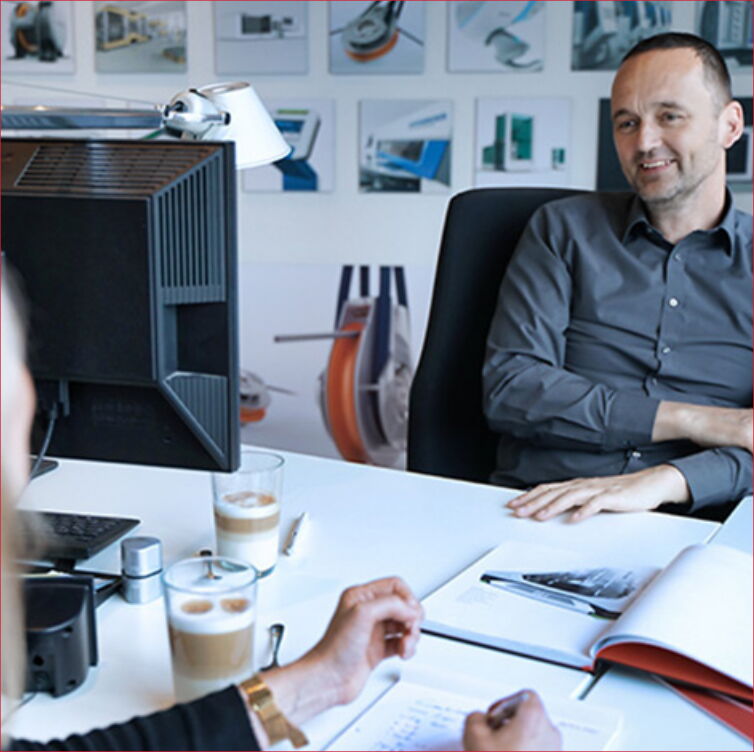
Interview with Stefan Grobe
defortec doesn't just design; the team works with its clients to develop complex technical products - always keeping its clients, their customers, and innovation in mind. Stefan Grobe gives eight answers as to why defortec's design is more than just a love of form.
You founded the design agency defortec on May 1, 2011 - what were your premises when you started?
That was an important step at the time. My goal was to build a professional company that could position itself internationally and, as a limited liability company, operate more independently of me as a person. I believe we have achieved this thanks to early investments in new processes and technologies.
Have these assumptions been proven correct?
Looking back, it was exactly the right decision. Over the past ten years, we have been able to continuously expand our customer base. Our tasks have steadily grown in scope, and today's projects are significantly more complex and challenging than in the early years. We now have customers in the US and Asia with completely new requirements. This means that our skills are constantly expanding, which is very exciting and motivating for all of us here. The team manages projects very independently, always working in a strictly solution- and customer-oriented manner. Just how well they do this can be seen in the many design awards that now line our shelves.
What has changed for you in the last ten years?
First of all, everything has become much more digital, not to say completely digitized. Corona has given this another boost, especially when it comes to meetings. In recent years, we have invested heavily in new skills, in prototype construction, 3D printing, and VR technology, which supports us in presenting and designing. Overall, I see all of this as a great opportunity to continuously optimize our work.
Is ten years a reason to celebrate?
Of course! When, if not now? We can look back on ten fantastic years. We have mastered the coronavirus year 2020 brilliantly, and contrary to the industry trend, our operating result has remained more than stable and is even developing positively. This is, of course, also thanks to our dedicated team, which sticks together and continues to develop—what more could you want! And yes, we will celebrate.
Now to the design—why do manufacturers of technical products actually need designers like your team?
We are actually asked this question quite often. Basically, the answer is simple: companies can only be successful and innovative if they change, that means always being one step ahead of market requirements.
defortec is one of many design agencies—what sets you apart from the rest?
We focus on capital goods, purely B2B products, but we do not pursue any further specialization. We design virtually everything that is complex, from medical devices to laboratory technology, robotics, and large-scale industrial plants. This is also where we derive our strength: transferring solutions and knowledge from one industry to another in order to trigger innovation there. We can score points here with our in-depth knowledge of materials and manufacturing processes. This is a wealth of experience that we are systematically expanding and updating. In my 25 years of self-employment, I have supervised over 200 different projects, which has given me a great deal of know-how. And that pays off especially in niche projects, which often present very special challenges. But that's exactly what we need.
“For us, design is not just a question of form, but must also be feasible for the client.” What do you mean by that?
Well, we love variety. One day we might be working on the concept for an air purifier, and the next on a preclinical histamine test—at first glance, these seem like very different things, but they are similar in their high level of complexity. It is precisely this diversity, with similarly demanding requirements, that makes our work so appealing and motivates us.
Which companies should be aware of defortec?
Many of our customers are medium-sized companies, occasionally start-ups, but of course also large corporations. What matters is not the size, but the courage and willingness of the company to change itself and its design. The stronger this desire is, the better it is for us, for the result, and thus for the company. Ultimately, we are service providers with an extreme focus on the customer. Everyone probably says that, but we listen very carefully and then know exactly what options the customer has for changing processes or implementing new ones. Because design is not just a question of form, it must also be feasible for the client. That's why we see ourselves much more as a development partner who also looks for technological options, supervises prototype construction, and also oversees the start of series production.
Where in the company would you ideally fit in as a partner?
First of all, there must be a willingness at management level to consistently implement design. This is because design changes not only the products but also the overall perception of a company. Design then becomes a real corporate asset, especially in technologically leveled markets. In concrete terms, design unfolds its full potential when product management, development, and management are directly involved in the design process. When it comes to concrete design development, we work very closely with the customer's engineering department, as this is a goal that we can only achieve together. Engineers are sometimes reluctant at first, but thanks to our technical expertise, this changes very quickly and we then work together on an equal footing.
How does a development process actually work?
There is no single process that always applies, because the tasks, goals, and products are all very different. In principle, we always start with a kick-off workshop, in which we not only define the task, but also present initial ideas and impulses for the design. This motivates everyone and forms a visual basis for the further procedure. This is followed by preliminary development to clarify the functionality, features, configurations, and technical aspects of the product, as well as production. Only in the third step do we address the design concept and design variants. At the end of this phase, the design is finalized and we move on to design detailing with prototyping, testing, and refinement.
Design does not come for free. Does design drive up development costs?
No, on the contrary. Design is an investment that creates an asset for the company beyond the product itself. Of course, design is a development service like many others that we provide as external partners and is therefore visible in terms of costs. But if you understand design the way we do, namely as a process that has an external and internal impact, then the cost-benefit ratio is always positive. Design develops charisma, motivates within the company, and provides points of identification for employees and customers. Let's put it this way: it becomes expensive when you do without design.
We are something of a catalyst, bringing fresh ideas and different perspectives. And we look at projects from the user or end customer's point of view, distilling the central use case – a clear-cut matter, really, but many companies think too much from their internal perspective.
Now, one could say that technical products are difficult to design because they must be primarily functional.
Far from it. Professional tools, to give just one example, also benefit from our design development. Functionality is one thing, but it's also about the positive overall perception of a product. Many tools and machines have evolved through repeated functional iteration and expansion, which has been at the expense of usability, ergonomics, functionality, and manufacturing and operating costs. Not to mention their visual appearance. Our design process first questions everything and then creates a conscious, professionalized product.